In the secret of Pentecost
Veronica O'Brien, mystic of the «fiat» and missionary fire
by Mr Waldery Hilgeman, Postulator of the Cause
There are saints whose work visibly bears their name. There are others whose fruitfulness remains almost entirely hidden in the vocations they have inspired, the people they have supported, and the ecclesial developments they have helped to make possible. The life of Veronica O'Brien falls uniquely into this second category of fruitfulness. Her name is linked to some of the most notable experiences of the Church in the 20th century: the Legion of Mary, the Second Vatican Council, the Catholic Charismatic Renewal, the service of Christian unity, and the FIAT apostolate. She stood alongside Cardinal Léon-Joseph Suenens, spiritually accompanied King Baudouin and Queen Fabiola, and collaborated with men and women called to assume leading ecclesial and civil responsibilities. Yet, to understand Veronica, it is not enough simply to list the people she met or the initiatives in which she took part.
The secret of her life lies deeper within herself. Cardinal Suenens, who worked with her for nearly fifty years, wrote that in Veronica, nature and grace lived in a rare unity: she was «supernaturally natural and naturally supernatural». He defined her as a «contemplative in the heart of the world» and recognised in her existence the discreet presence of that «hidden hand of God» which prepares encounters, opens paths and brings His designs to fruition through instruments that do not seek to take centre stage.
Her spiritual physiognomy can be described as a Marian and pneumatological mysticism of the Fiat: living in Mary, in the secret of Pentecost, so that listening to the Spirit becomes ecclesial discernment and missionary fire. Not a mysticism of the exceptional sought for its own sake, but of availability; not an intimist spirituality, but a communion with God that inevitably leads towards others; not a religious passivity, but a creative obedience capable of recognising the work of God and serving it even before it becomes evident.
This reading is not intended to anticipate the judgement reserved for the Church. A cause for beatification and canonisation does not construct an edifying figure, but seeks the truth about the concrete practice of virtues and the reputation for sanctity. It is precisely this requirement of truth that invites us to ask what form Veronica's following of Christ took and what message her life can address to the Church today.
The «Fiat» of a vocation sought in truth
Louise-Marie O’Brien was born in Midleton, Ireland, on 16 August 1905, the eleventh of thirteen children. From her childhood, she perceived the call to become a «fisher of men». During her formative years, she matured a radical abandonment to the love of God, expressed in words that already contained the programme of her life: choosing to love Christ, to accomplish His will and not her own.
In 1924, she entered the congregation of the Ladies of Saint-Clotilde, where she received the name Veronica. She spent years there marked by generosity, study, service, and also by a profound inner trial. She felt that the missionary call she had received did not find its full expression in the way of life she had embraced. However, she did not turn this perception into an individual demand. She sought counsel, waited, suffered and allowed herself to be accompanied.
During a decisive inner experience, she saw herself holding a lit torch while passing on the fire to other torches represented by people from all walks of life, especially priests and women religious. This image illuminated her vocation: not to keep the fire for herself, but to pass it on. After the necessary discernment and with the agreement of her superiors, she left the congregation in 1935. She did not abandon her consecration, but sought a lay and missionary form for it, which was difficult to classify at the time. She continued to live chastity, poverty and obedience, kept her religious name and remained faithful until her death to the awareness of belonging entirely to God.
This passage reveals an essential trait of her holiness. For Veronica, fidelity did not consist in clinging to a form for fear of losing it, but in seeking God's will even when it required navigating uncertainty. Her freedom was not autonomy from the Church; it was freedom in obedience, verified through concrete mediations and oriented towards mission. Her «Fiat» was not spoken once and for all. It became the permanent disposition to let herself be led beyond plans already understood.
Meeting Frank Duff provided her with her first concrete form of this vocation. After attending just a single meeting of a Legion of Mary praesidium, she was sent to France on the eve of the Second World War. During the German occupation, exposed to serious risks on account of her British passport, she established the Legion in Nevers. She then travelled across France, helping to give birth to hundreds of groups, and continued her mission in Belgium, Greece, Turkey and Yugoslavia.
She was not motivated by a taste for adventure, but by the conviction that every baptized person was called to become an apostle. Long before the Second Vatican Council recalled with particular force the universal vocation to holiness and the missionary responsibility of the laity, Veronica was already living out the consequences of this. She did not view the faithful as passive recipients of pastoral care, but as individuals who needed to be helped to discover their own calling, formed, and then sent forth.
Living in Mary, in the secret of Pentecost
When Suenens met Veronica in 1947, he was struck by the way she spoke of union with Mary as an openness to the Holy Spirit. He understood immediately that she was not setting out a doctrine learned solely from books: she spoke «from experience, with a rare depth». Herein lies one of the most original elements of her spirituality. For Veronica, the Marian and pneumatological dimensions were not two parallel devotions. Union with Mary constituted the concrete form of docility to the Spirit.
For her, Mary was the creature entirely available for divine action, the one who receives the Word in order to give Him to the world. Her «Fiat» does not stop at the interiority of the Annunciation: it leads to the haste of the Visitation and the missionary availability of Pentecost. To live in union with Mary meant entering into the dynamism of her consent: to welcome Christ, to let Him be formed by the Spirit within one's own life, and to bear Him to others.
Veronica’s spirituality can therefore be defined as Marian in its form, pneumatological in its dynamism, christocentric in its content and apostolic in its fruits. Jean-Luc Moens has synthesised this unity by stating that she lived her whole life «in Mary, in the secret of Pentecost». It is a particularly apt formula. The secret of the Pentecost is the interior place where the Fiat becomes fire: the gift received is transformed into a mission and communion with God engenders communion among men.
This helps us understand why, when in 1972 she discovered the Charismatic Renewal and received prayer for a renewed outpouring of the Spirit, Veronica immediately recognised it as an authentic grace. It was not a late conversion to a foreign spirituality. Rather, it was the manifestation, in a new ecclesial form, of what she had been living for many years: Mary in the Upper Room, open to the breath of the Spirit and at the service of the apostolic birth of the Church.
Veronica also understood that the Renewal must not become a closed environment or a movement centred on itself. She considered it to be a «current of grace» intended for all the baptised and for the whole Church. It was precisely because she recognised its spiritual origin that she also saw the need for serious doctrinal and ecclesial accompaniment.
Contemplative in the heart of the world
Cardinal Suenens identified the secret of Veronica's intense activity in her obedience to God, in her attentiveness to His Word and in her communion with His will. For many years, she slept little and irregularly; she spent long hours of the night in prayer, listening to and reading the Scriptures. Her Bible, from Genesis to Revelation, was heavily annotated. The Eucharist, adoration, the daily liturgy and the sacrament of Reconciliation nourished an intimacy with God that was not interrupted when action began.
For her, contemplation and mission were not two activities to be balanced from the outside. They constituted one and the same movement. Action was born from prayer and prayer tended to be fulfilled in tangible love. Even when she was on the phone or receiving a visitor, she sought the light to share in the Word. During her final years, almost always bedridden, she would prepare for her encounters by asking to be able to utter at least one word capable of encouraging and restoring life. When she could no longer cross countries and continents, her mere presence became missionary.
This unification did not erase her humanity. Veronica possessed an energetic, lively, independent and sometimes demanding personality. She had a typically Irish sense of humour and knew how to grasp the paradoxical side of situations. Grace did not coat her nature with a religious veneer; it penetrated her and transformed her from within. This is why Suenens could speak of a rare «symbiosis» between nature and grace. Holiness did not make her less human, but more free, more joyful and more apt to relate to others.
Joy was one of the most constant signs of this unity. Veronica went through misunderstandings, apostolic labours, physical and moral suffering without making pain the centre of her identity. At the end of her life, she was able to affirm that joy had never abandoned her. This was not a matter of temperament-based optimism, but the paschal joy of one who lives in the presence of God and awaits fulfilment from him.
A charism of discernment subject to the Church
Suenens speaks explicitly of an «extraordinary charism of discernment». He admired in Veronica her lucidity, doctrinal insight and ability to spot in a text what was imprecise, ambiguous or pastorally risky. More profoundly still, he affirmed that her doctrinal rigor, driven by an extraordinary spiritual experience, had helped him to distinguish the authentic presence of the Spirit and His charisms from the deviations and excesses encountered along the way.
This recognition is theologically decisive. Veronica was not simply a woman capable of bold insights. She possessed the ecclesial art of discernment, that is to say, of welcoming novelty without automatically identifying it with the will of God. In her, inspiration did not immediately turn into a project. Suenens recounts that, when an interior word pushed her towards an important initiative, she submitted it to religious authority so that its authenticity could be verified.
Even the vow, recalled by testimonial tradition, to invoke the Holy Spirit in important matters must be understood within this framework. It was neither the claim to receive immediate answers, nor a way of evading personal responsibility. It expressed the radical decision not to entrust the most important choices solely to intelligence, experience or the impulse of the moment. Veronica prayed, listened, examined and sought ecclesial confirmation. The vow thus demonstrates the depth of her «Fiat»: not simply doing something for God, but allowing God to go before her, to purify and to direct her action from within.
The dynamics of her experience can be summarised in four inseparable movements: interior inspiration, discernment, ecclesial verification, missionary action. It is this interweaving that preserves her mysticism from both subjectivism and immobilism. Veronica did not treat what she perceived inwardly as an absolute truth, nor did she use prudence as an excuse to avoid the surprises of God.
In her relationship with the Charismatic Renewal, she chose neither naive enthusiasm nor preemptive distrust. She recognised both its grace and its fragilities. She contributed to the dialogue between the leaders of the Renewal and the authority of the Church and suggested the creation of an international theological commission. The work of discernment that followed, in which she collaborated alongside Suenens, contributed to the preparation of the Malines Documents and helped the Renewal to root itself in the Catholic tradition, while addressing the risks of emotionalism, individualism and fundamentalism.
Between Peter and Paul: a vocation to communion
Veronica moved within a delicate ecclesial space: between charisma and institution, spiritual freedom and obedience, missionary boldness and doctrinal precision. She did not consider these poles to be antagonistic. She understood that charisma needs ecclesial communion to mature, and that the institution, to remain alive, must listen to what the Spirit stirs up within the people of God.
It is from this perspective that the mission of serving unity «between Peter and Paul», which was confirmed to her by Paul VI, takes on its full meaning. Peter evokes communion, authority and discernment; Paul, the dynamism of the Gospel, the freedom of charism and the boldness to reach new horizons. Veronica perceived it as her vocation to foster this encounter. She did not oppose the institution in the name of the Spirit, nor did she invoke the institution to control the Spirit. She served unity so that the charism could become a gift for the entire ecclesial body.
This mediation also helps to understand her influence on people invested with great responsibilities. Her closeness to Suenens, King Baudouin and Queen Fabiola does not in itself constitute proof of holiness and must not become a subject of celebration. Rather, it reveals the way in which Veronica exercised her spiritual motherhood: not by substituting herself for the conscience of others, but by helping each person to stand before God and personally assume their own responsibility.
The true spiritual guide does not create dependency. They generate freedom, awaken responsibility, and accompany the other person until the moment when they can recognise their own mission. Veronica did not wish to gather disciples around her. She wanted to form apostles. Her influence can be judged by the yardstick of the Gospel precisely through the fruits of freedom and service that she brought about.
«I do not count»: the fertility of the hidden hand
Veronica liked to repeat: «I don’t count.» Spoken by a woman blessed with a strong personality, intelligence and a spirit of initiative, this expression did not reflect self-deprecation. It meant not laying claim to God's work. Humility did not consist in denying the gifts received, but in recognising their source and destination; not in fleeing responsibility, but in exercising it without placing oneself at the centre.
Many initiatives to which she contributed were publicly associated with other names. Veronica accepted that the fruit should become visible while her part remained hidden. What mattered to her was that the Gospel should be proclaimed, that someone should find their way, that a grace granted to the Church should not be lost. The «hidden hand of God» thus also became the style of her existence: acting with determination and, at the same time, letting God appear more than the instrument.
During her mature years, this style also took concrete form in the FIAT apostolate. The acronym referred to the heart of the Incarnation, the fruit of Mary's «yes» to the Holy Spirit. The aim was not to create a spirituality reserved for a few, but to intensify the interior life of Christians so that it would become an apostolic life, especially within the family. Veronica's Trinitarian vision united the fatherhood of God, fraternity in Christ and life under the breath of the Spirit.
The FIAT chaplet constitutes a sort of spiritual testament of it. Born from a prayer experience on the night before the feast of the Nativity of Mary in 1984 and submitted immediately to ecclesial discernment, it expresses Mary's intimate union with the Holy Spirit. The prayer that introduces it invites us to relive the mysteries of Christ with Mary, in the faith of baptism, nourished by the Eucharist and renewed in the grace of Pentecost, in order to become, always and everywhere, faithful witnesses. The whole of Veronica's spirituality appears summarized there: Mary, the Spirit, Christ, the sacraments and the mission.
A contemporary form of holiness
The singularity of Veronica O’Brien does not lie in having added a new devotion to the heritage of the Church. It lies in having made docility to the Spirit the concrete principle of her own decisions and her own mission. Her «Fiat» was not a renunciation of action, but a source of boldness; not a suppression of the intellect, but its openness to a greater light; not passive obedience, but creative availability verified in ecclesial communion.
Her experience offers a particularly contemporary form of holiness. It shows that a laywoman can exert a genuine spiritual and theological influence within the Church without seeking visibility or assuming roles foreign to her vocation. It shows that evangelisation is not merely the result of holiness, but that it can become the very place where the baptised person is sanctified. It shows that contemplation, discernment, female freedom, ecclesial obedience and apostolic responsibility can be part of the same path.
At a time when charisma and the institution are still easily opposed, Veronica reminds us that both come from the same Spirit. In a culture that measures fruitfulness by the yardstick of visibility, she testifies to the strength of hidden lives. In a Church committed to fully recognising the vocation of laypeople and women, she shows that authentic spiritual authority does not occupy the space of others, but makes them freer before God.
The Church will rigorously and freely pursue its discernment regarding its life and the practice of Christian virtues. Without prejudging this judgment, we can recognise the question that Veronica’s testimony puts to every baptised person: are we ready to pronounce our «Fiat», to live under the breath of the Spirit and to bear Christ wherever the Church and the world await His presence?
Perhaps this is her most authentic legacy: not drawing people to herself, but leading them to Christ; not choosing between the Spirit and the Church, but serving their unity; not keeping the fire received, but passing it on; not taking the place of others, but awakening their mission. Veronica O'Brien thus appears as a witness to a mysticism of the «Fiat» lived in the secrecy of Pentecost: contemplative and apostolic, Marian and pneumatological, deeply ecclesial and astonishingly fruitful.
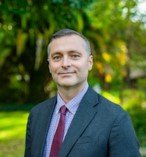
Dr Waldery Hilgeman
Postulator of the Cause of Beatification and Canonisation of the Servant of God Veronica O’Brien
Essential sources
L.-J. Card. Suenens, L.-J. Card. Suenens, Memories and Hope, Edizioni Paoline, Milan 1993;
L.-J. Card. Suenens, King Baudouin, Re Baldovino; A life that speaks to us, Società Editrice Internazionale, Turin 1995; ;
J.-L. Moens, Veronica O’Brien. A Life in the Fire of the Mission Editrice Velar, Ponteranica 2025.